Picking the right campsite can make or break your camping trip. A good spot is safe, comfortable, and convenient — and it doesn’t take long to learn what to look for. Here’s a simple guide to help beginners choose the perfect campsite every time.
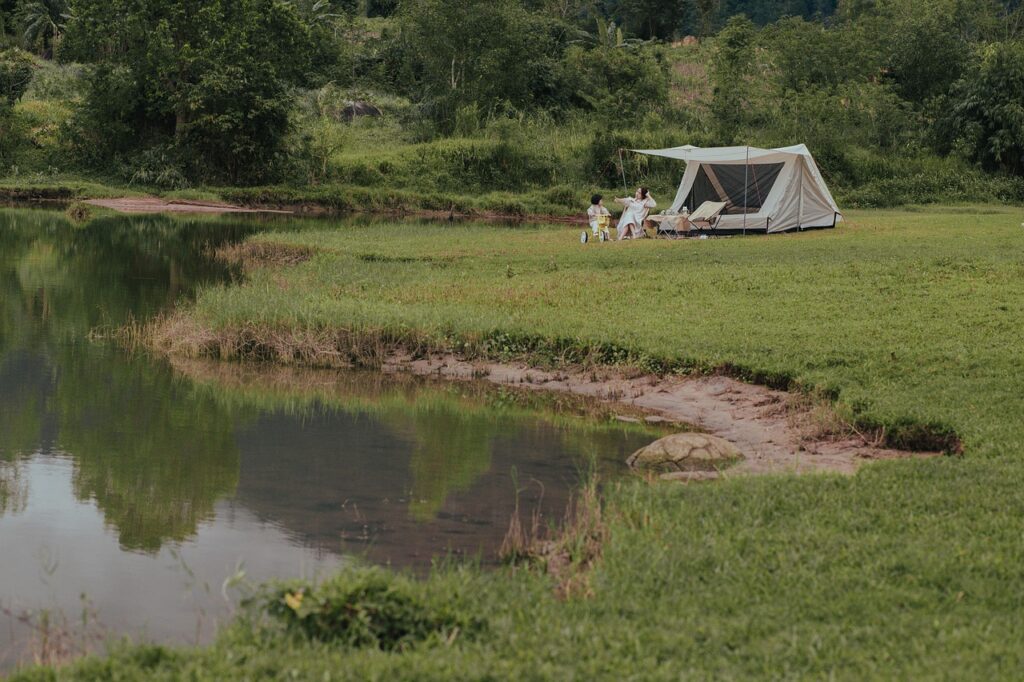
1. Look for Flat, Level Ground
A flat area makes sleeping more comfortable and keeps your tent stable.
Avoid:
- Slopes
- Dips where water can pool
- Rocky or uneven ground
2. Check for Shade
Shade helps keep your tent cool during the day.
Best option: A mix of sun and shade — morning sun, afternoon shade.
3. Stay Away From Low Spots
Low areas collect water when it rains.
Choose: Slightly higher ground with good drainage.
4. Consider Wind Direction
Wind can make nights cold and noisy.
Tip: Use natural windbreaks like bushes, trees, or hills.
5. Keep a Safe Distance From Water
Water looks nice, but camping too close can be unsafe.
Avoid:
- Flood zones
- Riverbanks
- Areas with strong tides
Stay: At least 50–100 metres away.
6. Check the Surroundings
Look up and around for hazards.
Avoid camping under:
- Dead branches
- Loose rocks
- Old trees that could fall
7. Think About Privacy
Choose a spot that’s not directly on a main path or too close to other campers.
8. Stay Close to Facilities (If You Want Convenience)
For beginners, being near:
- Toilets
- Water taps
- Rubbish bins
…makes everything easier.
9. Follow Campsite Rules
Some areas have designated tent pads or restricted zones. Always follow signs and guidelines.
10. Trust Your Gut
If a spot feels unsafe, exposed, or uncomfortable, move on. There’s always a better one nearby.
Conclusion
Choosing a good campsite is simple once you know what to look for. With flat ground, some shade, and a safe distance from hazards, you’ll set yourself up for a comfortable and enjoyable camping trip.